Aravind Srinivas
aravind srinivas builds search engines that think out loud, then wonders why the rest of tech moved to desks
Perplexity AI, Inc., or simply Perplexity, is an American privately held software company offering a web search engine that processes user queries and synthesizes responses. Perplexity products use large language models and incorporate real-time web search capabilities, providing responses based on current Internet… wikipedia →
12-month trajectory
interviews & talks

Joe Rogan Experience #2521 - Aravind Srinivas

If I Get Another Chance, I’ll Buy Google Chrome — Perplexity CEO Aravind Srinivas x Gobinath

How AI Will Answer Questions We Haven’t Thought to Ask | Aravind Srinivas | TED

$20B AI CEO: The ONLY trait for success in the AI era | Aravind Srinivas, Co-founder of Perplexity
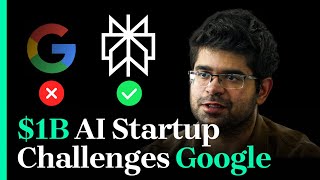
$8B in Just 2 Years, The World's Fastest-Growing Startup | Perplexity AI, Aravind Srinivas
recent news
srinivas career journey
- 'Whatever comes easy to you..': Sam Altman gave Perplexity CEO Aravind Srinivas one line of advice that c - The Times of India
- Rejected by IIT Madras, MIT and even his first startup: How Aravind Srinivas turned repeated setbacks into... - Moneycontrol.com
- Aravind Srinivas: Rejected by IIT Madras Computer Science, MIT and even his first startup — how setbacks - The Times of India
+ 4 more
ai efficiency and metrics
- Perplexity plans IPO in 2028 regardless of what happens to Anthropic or OpenAI, CEO tells CNBC - MSN
- Perplexity, Sky and McDonald's: This Week's Top Five Stories - Business Chief
- Perplexity CEO Aravind Srinivas says Microsoft's office culture was built to drive software adoption - Storyboard18
+ 8 more
perplexity ipo plans
- Why Perplexity's Founder Doesn't Think the American Dream Is Over - Business Insider
- Why Perplexity's founder doesn't think the American dream is over - Business Insider Africa
- Why Perplexity's founder doesn't think the American dream is over - AOL.com
+ 3 more
srinivas leadership views
- The AI race is shifting from bigger models to cheaper, smarter systems - CNBC
- 'Bill Gates trapped the world in 9-5 jobs': Perplexity AI's CEO Aravind Srinivas makes big claim regarding ... - Bhaskar English
- Perplexity is quietly building an AI coding tool to take on Cursor and Claude Code - Business Insider
+ 9 more
perplexity strategy
- The AI race is shifting from bigger models to cheaper, smarter systems - CNBC
- Perplexity CEO Says US Best Place to Build Startup - Let's Data Science
- ‘All I wanted was a job at Google’: Perplexity CEO Aravind Srinivas reflects on his Indian... - Moneycontrol.com
+ 3 more
us startup ecosystem
us india tech ties
ai industry trends
- It was Gates' mission to get people glued to computers: Srinivas | 'That’s why we all got trained with Microsoft' | Inshorts - Inshorts
- Perplexity CEO says US still leads in nurturing bold ideas - MSN
- Perplexity CEO Aravind Srinivas on why American dream is not over: America's the only country where you c - The Times of India
+ 2 more
perplexity controversies
- Perplexity's CEO Predicts Micron Could Overtake Meta In Stunning AI Power Shift: 'Whatever Is The Bottleneck Will...' - Benzinga
- Attack, Attack, Attack: Aravind Srinivas on Why Perplexity Wants to Be AI's Orchestrator, Not Its Model-Builder - Dealroom
- Nvidia's Jensen Huang Runs A $5 Trillion Giant Like It's 30 Days From Collapse. Perplexity's CEO Says That's The Secret— 'You Need To Work Forever…' - Sahm
+ 3 more
more
- Meet the young billionaires getting filthy rich off AI — and their lavish purchases - New York Post
- Perplexity CEO Aravind Srinivas on the one thing that sets US apart: ‘It's why America is still at the top’ | Hindustan Times - Hindustan Times
- Perplexity CEO reveals the most important lessons he learned from Jensen Huang and Elon Musk - جولة
dispatch
there's a version of the search engine that just gives you the link and gets out of the way. aravind srinivas is betting everything that version is finished.
srinivas grew up in india, made his way through the research ranks — stints at openai, deepmind, google — and then, in 2022, co-founded perplexity ai with three others. the pitch wasn't complicated: instead of returning ten blue links, the product would read the web for you and synthesize an answer, with sources attached. clean, direct, no archaeology required. by this past september, that idea was valued at twenty billion dollars. not bad for something that's essentially a re-imagination of a tool everyone assumed was already solved.
what's keeping him in the conversation right now is a combination of product aggression and a willingness to say things that other ceos in his position tend to keep to themselves. the bill gates comment has been making the rounds — srinivas arguing, in fairly blunt terms, that the entire architecture of modern office life, the knowledge worker, the desk job, the dependence on microsoft software, was less an organic cultural evolution and more a sales strategy. gates built an ecosystem that required people to sit down and use it. the desk was the product. srinivas framed this not as conspiracy but as a kind of design logic, and the reason it landed is that it sounds like something you'd think but not say at a conference. he said it at a conference.
that instinct — to pull the frame back and ask why the default exists — is pretty consistent with what perplexity is actually building. the company is now quietly developing an ai coding tool, moving into territory currently held by cursor and claude code. it's a crowded space, but the move signals something: srinivas isn't treating perplexity as a search product with a fixed lane. he's building toward whatever interface comes after the one we're currently staring at.
there's also the messier stuff, which is part of the picture. perplexity has faced serious legal pressure from publishers — the bbc, the new york times, dow jones — over how its crawlers collect content. separate investigations found the company was using scrapers that disguised themselves as something else, visiting sites that had explicitly said no. srinivas hasn't been particularly apologetic about the underlying model, which is part of what makes him a polarizing figure rather than just a celebrated one. he believes the old content economy needs to be renegotiated. the people who built that economy are, understandably, less sure he's the right person to do the renegotiating.
but that tension is also what makes him worth watching at this particular moment. he's not trying to make everyone comfortable with the transition happening in information and search and, now, coding. he's trying to move fast enough that comfort becomes beside the point. the bill gates read wasn't just a hot take — it was a statement of intent. the desk was built around the software. srinivas wants to know what you build when the software thinks back.