
Benjamin Netanyahu
benjamin netanyahu navigates the collision between military strategy and constitutional limits while consolidating control over israel's fractured political center
Benjamin Netanyahu (born 21 October 1949), nicknamed "Bibi", is an Israeli politician and diplomat who has served as Prime Minister of Israel since 2022. Having previously held office from 1996 to 1999 and from 2009 to 2021, Netanyahu is Israel's longest-serving prime minister. Born in Tel Aviv, Netanyahu was raised… wikipedia →
12-month trajectory
interviews & talks

Full interview: Israeli Prime Minister Benjamin Netanyahu

Extended interview: Israeli Prime Minister Benjamin Netanyahu

EXCLUSIVE: Ben Shapiro Interviews Benjamin Netanyahu

Israeli Prime Minister Benjamin Netanyahu spoke with ABC News’ Linsey Davis
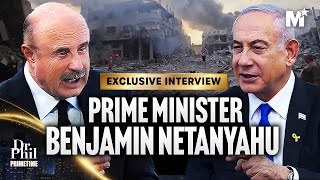
Dr. Phil's Exclusive Interview with Prime Minister Benjamin Netanyahu | Dr. Phil Primetime
recent news
turkey syria tensions
- Türkiye vows to thwart Netanyahu’s 'destabilising activities' - TRT World
- Türkiye will not fall into Netanyahu's Syria trap: Turkish official - Türkiye Today
- Turkey says it ‘will not fall into trap’ set by Netanyahu in Syria - The Times of Israel
+ 17 more
ben gurion airport strike
- Netanyahu threatens firings as Ben Gurion Airport chaos halts landings - Ynetnews
- Ben Gurion Airport strike chaos – operations resuming - www.israelhayom.com
- Benjamin Netanyahu: Ben-Gurion Airport to remain open, consequences for interference - The Jerusalem Post
+ 1 more
likud party primary
- Netanyahu said to weigh giving reserved Likud spots to MKs who fared badly in party primary - The Times of Israel
- Likud fears potential Ofer Winter and Yoseph Haddad alliance could split votes - The Jerusalem Post
- Netanyahu may reserve a Likud spot for son Yair, former prime minister's spox. Hefetz predicts - The Jerusalem Post
+ 5 more
iran protests social media
dispatch
benjamin netanyahu is not a man who believes the argument is ever really over — and right now, the argument is everywhere.
he was born in tel aviv in 1949, grew up between jerusalem and the united states, and came back to israel at seventeen to serve in the sayeret matkal, the IDF's most selective special forces unit. that combination — the american education, the MIT degree, the boston consulting group years, the brother killed at entebbe — gave him a biography that was always as much myth as résumé. he understood early that in israeli politics, image and survival are essentially the same discipline. he became likud's chair in 1993, prime minister by 1996, lost, came back, lost again, came back again, and is now, by some distance, the longest-serving prime minister in the country's history. longevity in that office is not an accident. it requires a particular appetite for the game.
what makes him "it" right now isn't any single event — it's the convergence of several pressure points happening simultaneously, and the fact that he seems to be leaning into all of them at once.
the most constitutionally significant: his government has, for the first time, explicitly stated it will defy a ruling from israel's supreme court — specifically on the appointment of a media regulator. this isn't a procedural squabble. it's a government telling its own judiciary that the separation of powers is, effectively, optional. the judicial reform protests of early 2023 never really resolved; they just got buried under the weight of october 7th. what's emerging now is the unresolved version of that crisis, surfacing again at exactly the moment when most of the country's attention is fixed on the wars.
and the wars are not small. the second invasion of lebanon is underway. netanyahu has been publicly denying that the trump administration placed any restrictions on israeli strikes there — a denial that itself tells you something about the diplomatic tension underneath the alliance. meanwhile, at home, families of hostages still held in gaza are holding protests, with relatives of the dead asking pointed questions about accountability. his position on gaza reconstruction — no rebuilding until hamas is fully disarmed — is a policy that sounds like a condition but functions more like an indefinite deferral.
then there's the ICC arrest warrant, issued in november 2024, for alleged war crimes and crimes against humanity. he travels with that warrant now. it doesn't stop him from governing, but it changes the geometry of every international engagement. some countries would be obligated to detain him. others quietly look the other way. it's a legal reality that hovers over everything without quite resolving into anything — which is, in a way, a very netanyahu situation.
what you're watching is a politician who has spent thirty years making himself impossible to remove, now operating in a landscape where the constitutional guardrails, the international legal architecture, and the domestic grief of a country still absorbing october 7th are all pressing against him at once — and who is, characteristically, pressing back.
the question was never whether netanyahu would face consequences. the question has always been which institution, if any, has enough structural integrity left to make them stick.