
Janet Yellen
janet yellen navigates the thorniest riddle in modern economics: whether inflation was temporary or structural, and what that means for all of us
Janet Louise Yellen (born August 13, 1946) is an American economist who served as the 78th United States secretary of the treasury from 2021 to 2025 and as chair of the Federal Reserve from 2014 to 2018. She was the first woman to hold either position, and has also led the White House Council of Economic Advisers. Y… wikipedia →
12-month trajectory
interviews & talks
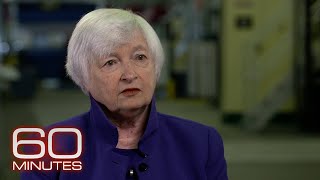
Treasury Secretary Janet Yellen: The 2022 60 Minutes Interview

Watch CNBC's full interview with former Treasury Secretary and former Fed Chair Janet Yellen

My Interview with Janet Yellen

Janet Yellen warns of "bubble-like activity" in A.I.

"It Was Ok" - Sec. Janet Yellen On Trying Marijuana For The First Time
recent news
debt and fiscal sustainability
- ‘We’re on an unsustainable course,’ warns former Fed chair Janet Yellen - Trustnet
- Yellen Says Inflation Is Top Challenge as Labor Market Cools - bloomingbit
- Former Treasury Secretary Yellen: AI has been a huge driver of economic growth - CNBC
+ 7 more
inflation and monetary policy
- China's central bank vows to expand yuan's international use in five-year plan - Reuters
- Former Treasury Secretary Yellen Voices Unusually Cautious Stance on FX Intervention: "Long-Term Effects Are Rare" - finance.biggo.com
- The new Expert XP brings together global leaders to discuss the future of the economy and business - NeoFeed
+ 6 more
fed independence and trump
- ‘We’re on an unsustainable course,’ warns former Fed chair Janet Yellen - Trustnet
- Clear cut case of no rate cut, no shortcut to lower US debt: Yellen - The Edge Singapore
- Rate hikes unlikely despite hot inflation and strong jobs in US: Amundi - The Business Times
+ 1 more
ai and financial risks
international trade and relations
- Watch CNBC's full interview with former Treasury Secretary Janet Yellen - CNBC
- So far, AI is driving inflation more than controlling it, says Janet Yellen. - NeoFeed
- Scott Bessent keeps calling inflation ‘transitory,’ a word that burned Janet Yellen badly - Crypto Briefing
+ 3 more
yellen interviews and speeches
- Today’s Jewish birthday: Janet Yellen - San Diego Jewish World
- President’s Speaker Series Dinner: Janet Yellen - MSU Denver
- Kevin Warsh's Fed Tenure Begins with a 'Good Family Fight' - Devdiscourse
+ 11 more
tariffs and trade policy
climate finance
china diplomacy and culture
- Janet Yellen is proud to be inducted into the National Women’s Hall of Fame: ‘It makes me part of that story’ - Fortune
- Yellen Still Sees Chance of a Fed Cut This Year Amid Oil Shock - Bloomberg.com
- Video Senate could vote and confirm Janet Yellen as treasury secretary today - ABC News - Breaking News, Latest News and Videos
global taxation
banking and surveillance
awards and recognition
dispatch
janet yellen just left government, and she's not being quiet about it.
she spent four years as treasury secretary navigating the strangest economic weather in a generation — the pandemic, the stimulus, the inflation that followed — and now, from outside the building, she's saying things that the people still inside might not want to hear. that's where the attention is right now.
to understand why it matters, it helps to know who she is. yellen grew up in bay ridge, brooklyn, the daughter of a doctor, and she had a serious mind early. brown for undergrad, a ph.d. from yale in 1971, then harvard, then the fed, then berkeley, then back to the fed — she spent decades moving between academia and public service in a way that's actually unusual. most economists stay on one side of that line. yellen kept crossing it. she chaired the council of economic advisers under clinton, led the san francisco fed for six years, became fed vice chair under obama, then fed chair — the first woman to hold that position — and then secretary of the treasury under biden. also the first woman there. the résumé is almost too tidy, except that each of those roles came with genuine difficulty and real stakes.
the word that's following her around right now is *transitory*. during the biden years, yellen — along with the fed — described the post-pandemic inflation surge as likely temporary, a supply-chain story that would resolve on its own. it didn't, not quickly anyway, and that word became a kind of shorthand for a costly misjudgment. what makes this moment strange is that her successor at the treasury, scott bessent, has started using the same word to describe current price pressures — and yellen has noticed. she's been pointed about it. inflation, she's argued, would already be back near the 2% target if not for the tariff policies of the current administration and the energy demands being driven by AI infrastructure build-out. that's a specific claim, and a fairly pointed one.
but the debt warnings are what's drawing the most sustained attention. yellen has said, clearly, that the united states is on an unsustainable fiscal course. she's flagged the possibility of an abrupt repricing in debt markets — the kind of rethink that doesn't announce itself in advance and doesn't give you time to adjust gracefully. she's specifically named threats to the independence of the federal reserve as a source of instability. these aren't abstract concerns; they're the observations of someone who spent years managing sovereign debt, who watched what happens when markets lose confidence in institutional credibility. she's not catastrophizing. she's describing mechanics.
the alan greenspan obituaries floating around right now add a layer to all of this — greenspan was the "maestro," the fed chair whose mystique defined a whole era of american monetary confidence. yellen's career was shaped in that shadow. and now, with greenspan gone, with questions about fed independence louder than they've been in decades, and with the transitory debate reprising itself in real time, she's become the person with the most credible standing to say: here's what I've seen, here's what worries me.
the thorniest question in economics right now isn't just whether prices stabilize. it's whether the institutions that manage them still command enough trust to do the job. yellen knows what that trust is worth because she spent a career building it — and she's not sure we're treating it carefully enough.