Ray Kurzweil
ray kurzweil keeps betting that technology will outrun mortality itself, and he's willing to stake his credibility on the timeline
Raymond Kurzweil ( KURZ-wyle; born February 12, 1948) is an American computer scientist, author, entrepreneur, futurist, and inventor. He is involved in fields such as optical character recognition (OCR), text-to-speech synthesis, speech recognition technology and electronic keyboard instruments. He has written book… wikipedia →
12-month trajectory
interviews & talks
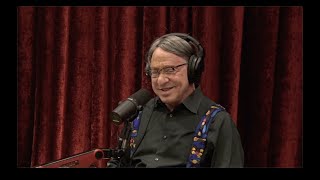
Ray Kurzweil Predicts AI Will Change Humanity Completely by 2030

The Singularity Countdown: AGI by 2029, Humans Merge with AI, Intelligence 1000x | Ray Kurzweil

Joe Rogan Experience #2117 - Ray Kurzweil

The Last 6 Decades of AI — and What Comes Next | Ray Kurzweil | TED

Ray Kurzweil explains the Singularity | Lex Fridman Podcast Clips
recent news
singularity timeline predictions
- Ray Kurzweil Predicts AI Will Change Humanity Completely By 2030 Inter Miami Vs Toronto (68SKnVPbt5) - Mshale
- Ray Kurzweil: Living In The Singularity 2026 | by Tim Ventura | Predict | Aug, 2026 - Medium
- The Technological Singularity: Five Visions of the Future | by Tim Ventura | Predict | Aug, 2026 - Medium
+ 8 more
life extension and aging
- Ray Kurzweil, Elon Musk and the Timeline That Declared the Singularity Here - LinkedIn
- Ray Kurzweil Predicts AI Will Change Humanity Completely by 2030 | The Tony Robbins Podcast - Podcast Notes
- Ray Kurzweil Unveils RAI - PR Newswire
+ 9 more
kurzweil's predictions accuracy
- Dean Graziosi & Tony Robbins Spotlight Ray Kurzweil, Igor Pogany - The National Law Review
- What Makes Ray Kurzweil a Pioneer in AI Innovation? - Analytics India Magazine
- Will aging end by 2032? Futurist Ray Kurzweil’s bold prediction explained - The News International
+ 4 more
ai and human enhancement
- Nonbiological Man: He’s Closer Than You Think - britannica.com
- Ray Kurzweil says aging may stop being one-way by 2032, and skeptics hear another big promise - Yahoo
- Futurist Kurzweil declared the possibility of stopping aging by 2030 - Turkmenportal.com
+ 17 more
kurzweil's influence and legacy
- Ray Kurzweil says aging may stop being one-way by 2032, and skeptics hear another big promise - The Cool Down
- Ray Kurzweil says aging may stop being one-way by 2032, and skeptics hear another big promise - Yahoo News UK
- A Scientist Says Humans Will Go Backwards in Time Within Just 3 Years - tech.yahoo.com
+ 6 more
ai and societal implications
dispatch
ray kurzweil has been predicting the future for so long that the future is starting to catch up with him — and that's exactly what has people paying attention again.
he was born in queens in 1948, the son of a musician father who died young of heart disease. that loss lodged somewhere in him and never quite left. by his twenties he was already building things — optical character recognition systems, reading machines for the blind, the kind of work that earned him a national medal of technology from bill clinton and eventually landed him in the national inventors hall of fame. but the inventions, impressive as they were, always felt like warm-up acts. what kurzweil was really building, across decades of books and lectures and public predictions, was a theory of time — specifically, how fast intelligence and biology were about to change, and what that meant for anyone alive to see it.
the theory has a name most people know by now: the singularity. the idea that artificial intelligence and human cognition will converge, and that the line between machine and biology will dissolve into something genuinely new. kurzweil has been saying this for thirty years, and for most of that time it was easy to file it under visionary-but-probably-not. then the last few years happened.
what's pulling him back into the conversation right now is a specific date: 2029. kurzweil has long held that artificial general intelligence — a machine that can match human cognitive ability across the board — arrives that year. and what's changed is that he's no longer saying it alone. demis hassabis, the co-founder of google deepmind and probably the most credible technical voice in the field right now, has publicly aligned with that same window. when the person actually building the systems starts echoing the futurist's timeline, the futurist starts sounding less like a prophet and more like someone who did the math early.
there's also the mortality piece, which has gotten sharper. kurzweil is now saying that the end of aging — not the slowing of it, the actual end — arrives around 2032. his argument is that biotechnology is on an exponential curve, the same curve that took computing from room-sized machines to pocket computers, and that nanoscale interventions in the bloodstream will eventually maintain the body the way software gets patched. he's 77 years old. he takes something like a hundred supplements a day. the self-experimentation isn't incidental — it's part of the claim. he's betting his own body on the timeline holding.
what makes this moment different from previous kurzweil cycles isn't that the predictions are more dramatic — they've always been dramatic. it's that the gap between the predictions and the present has closed enough that serious people feel obligated to engage. the gospel coalition is writing theological responses. portfolio managers are asking what the singularity implies for asset allocation. that's a different kind of cultural moment than a ted talk getting shared around.
the thing about kurzweil is that he's always been less interested in being believed than in being right. the timelines are precise, the logic is documented, the predictions are numbered and dated. if 2029 comes and goes without AGI, that's a real reckoning. but if it doesn't — if hassabis ships something in the next four years that changes the terms of the conversation — then a kid from queens who lost his father too early will have turned grief into the longest-range forecast in the history of technology.